Showing posts with label food. Show all posts

Monday, September 2, 2024

Halloween Food Activities for Kindergarten ELLs | Vocabulary Games, Worksheets and Flashcards

Download the resource here:   https://www.teacherspayteachers.com/Product/Halloween-Food-for-the-Kindergarten-ELLs-14564421


Halloween is the perfect time to make food vocabulary lessons more exciting for Kindergarten English Language Learners. This Halloween Food resource combines seasonal fun with meaningful language practice through flashcards, games, worksheets, pocket chart activities, and speaking tasks. Young learners practice identifying food vocabulary, expressing likes and dislikes, making requests, and participating in interactive activities designed specifically for beginning ESL and EFL students. The Halloween-themed food items help keep students engaged while building essential vocabulary and communication skills. 

Incorporating a Halloween food lesson into your teaching plan can provide a rich, immersive experience that supports the unit during the Holiday. Review the food items with these Halloween printables. The theme of Halloween is inherently exciting for young children.

Halloween food vocabulary flashcards

 Print the flashcards that come with a visual representation of the food items vocabulary, helping young learners connect words to images, using the Halloween thematic features, such as eyeballs, spiders, etc.

Sort with the students their food preferences using the flashcards: I like pancakes! I don’t like cereal.

Halloween food vocabulary flashcards

Have the students say which is their favorite Halloween food:

I like hot dog!

food theme preschool Halloween

Kindergarten ESL activities with the food small cards

Create a role-play situation where students can "order" food items using the flashcards. One student can be the server, and others can be customers. Have them use simple phrases (e.g., "I want a cookie, please").

 The small cards are great for printing saving purpose. Plan a Sequencing activity to help students understand the concept of order. Listening skills are in practice as you say the sequence and they find the cards to put them on the table: pizza, juice, spaghetti, pancakes.

Halloween food theme ideas for preschool

The sequence for speaking skills:


Halloween ESL food worksheets

Hand in the worksheets with the like and don’t like along the Halloween food items. Have the learners color the items, cut along the lines and have a set of cards for many activities. By expressing preferences, students practice basic sentence structures such as "I like..." and "I don't like... ". I like hot dogs! I don’t like eggs.

food worksheets for preschool

take a look!


Review the structure: I want (a hamburger)! using the worksheets in this resource. Model an example and have the students repeat.

 
This Halloween cookie jar worksheet is a fun way to color. Students will color as the dice land. Prepare them ahead of time.

Halloween food worksheets for preschoolers

Halloween Food vocabulary activities

The
pocket chart printables with Halloween food cards can be a highly interactive resource. It is a tactile, hands-on learning experience.

Pocket charts are very versatile. Do a food word to Halloween picture matching to reinforce different language skills such as reading or listening. Expand to phrases or short sentences.


Halloween Food vocabulary activities

Halloween Food Pocket Chart Activities

 Print the cards double. Place cards face down. Students take turns flipping over two cards at a time, trying to find matching pairs. If they match, they keep the cards and take another turn. This game encourages concentration and vocabulary recall.


Halloween food vocabulary cards organized on a pocket chart for ESL and ELL learners.

Halloween food vocabulary for kids

Students will be willing to participate in the lesson by feeding the witch using the same pocket chart cards. 

feed the witch 

They practice naming and identifying Halloween-themed food items, as they feed the witch. Handling the food items and placing them into the box helps develop fine motor skills.


Let's feed the witch!


Once again use the pocket chart cards. Students can place letter cards to spell the word. 
spelling halloween food words

Use any of the cards for this spelling activity to make a connection between the word and its meaning.
spelling halloween food words

ESL Halloween food games

Print game board templates with Halloween food images and the markers.

ESL Halloween food games

When a player lands on a space with a Halloween food image, they must "Say the name of this food", as: It’s an ice cream!

ESL Halloween food games

This bundle provides complete Halloween-themed ESL lessons designed specifically for Kindergarten English Language Learners.


 I also created an Elementary Halloween Food resource with more advanced reading, writing, sentence-building, preferences, requests, puzzles, and grammar activities. It is perfect for students who are ready to move beyond basic vocabulary practice and use Halloween food words in complete sentences and communicative tasks. Check the blog post:    https://eflelementaryresources.blogspot.com/2025/08/halloween-food-vocabulary-activities.html


This bundle provides complete Halloween-themed ESL lessons designed specifically for Kindergarten English Language Learners.

Take a look at the ESL food cutouts for kindergarten vocabulary practice, included in the complete food unit resource, here:   https://eflpreschoolteachers.blogspot.com/2021/04/food-unit-cutouts-for-kindergarten-ell.html


Discover Engaging Resources for Your Elementary ELL Students at my other blog. https://eflelementaryresources.blogspot.com

Tuesday, May 17, 2022

Zoo Animals Unit Flashcards for Kindergarten English Language Learners

 Find Zoo Animals activities for kindergarten ESL students including worksheets, games, crafts, counting activities, and printable classroom resources, all here:    https://www.teacherspayteachers.com/Product/Zoo-Animals-Unit-for-Kindergarten-Holistic-English-Series-26-8078353

ZOO or Jungle unit  for Kindergarten English Language Learners

Research has shown that using flashcards in the classroom helps to improve the students’ vocabulary knowledge by using them to play games and speaking activities keeping the students interested.This resource includes colorful flashcards, movement activities, vocabulary practice, body parts review, emotions, shapes, commands, and interactive games designed especially for young ESL and EFL students.


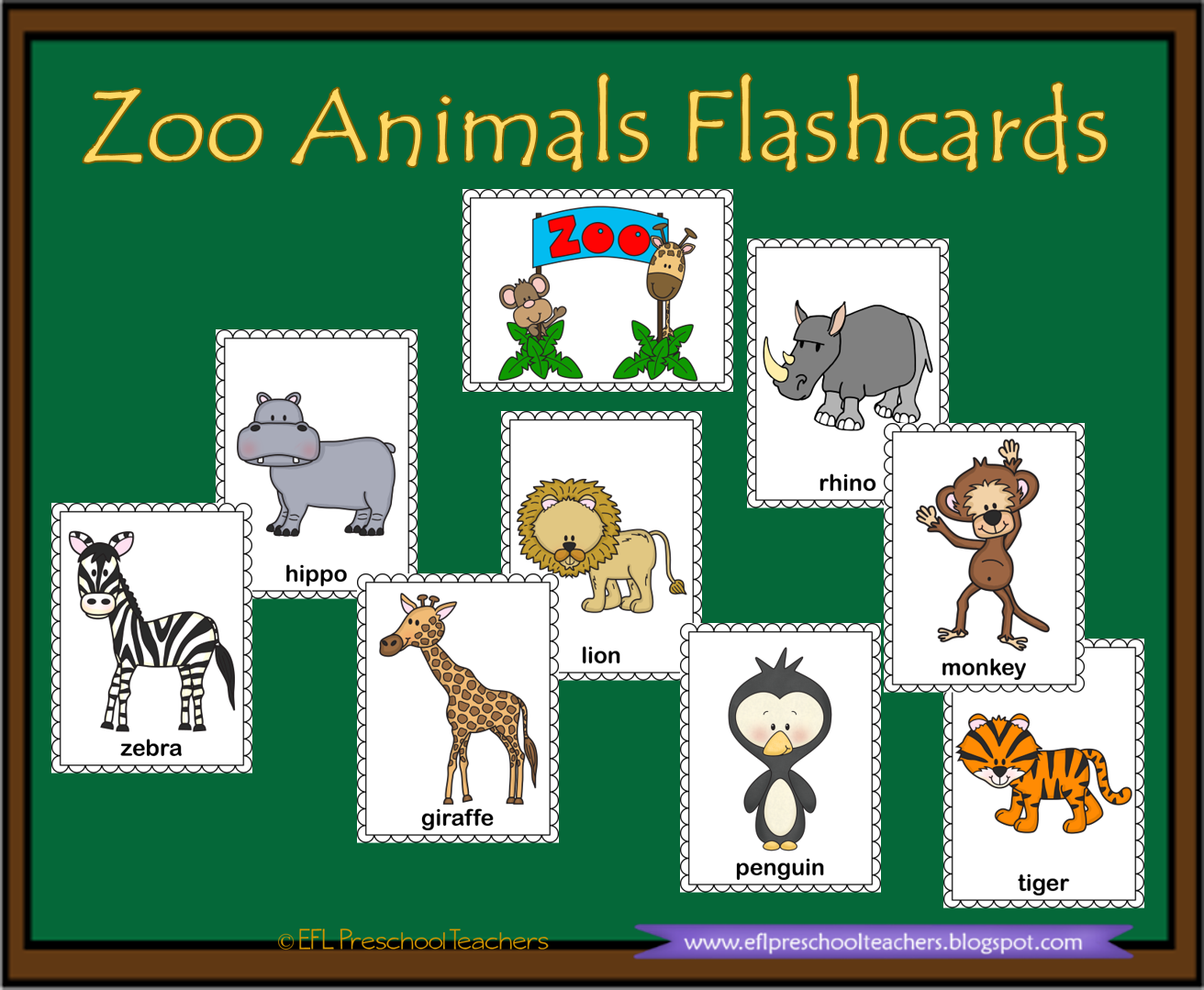
For the zoo or jungle animals you can find the kangaroo,giraffe, elephant, tiger,lion, crocodile,bear,hippo, monkey,toucan,snake, elephant, monkey flashcards among others.

Practice Zoo Animal Vocabulary and Sentence Patterns

Start with the zoo flashcards as a support material, place it in the middle of the classroom or board. Ask the students which animals they have seen or think lives in a zoo in their own language. As they come up with names, place them under the zoo flashcard and say the name in English.

Introduce this sentence for your students to model:
The hippo lives in at the zoo.

Teacher: What color is the hippo?
Students: It's gray!

zoo animals flashcards material

Use the zoo flashcards to reinforce the structure What is it?

Teacher: What is it?
Students: elephant! It’s an elephant.

Teach Zoo Animal Action Verbs

Use the flashcards to introduce how the animals actually move.

Teacher: How does the elephant move?
Students perform the action.
Teacher: Oh! Elephants walk.
Continue with the rest of animals using the flashcards. Introduce the verbs such as swing for the monkey,swim for the sea lion, walk for the elephant.

Make statements with can: The eagle can fly.

fZoo animals unit flashcards for kindergarten ESL students

Practice Listening Skills with Movement Commands

Place several animal flashcards around the classroom. It can be on board, under the chairs, on the desks, etc.
Teacher: Where is the lion?
Students: (run and touch) Here!

flashcards around the classroom

Move like the zoo animals do.

 These are commands review flashcards.

Students will understand and be able to give simple classroom commands.  Students should be related to the language used in the classroom. Here is an example with the giraffes. There are more zoo animals flashcards for students to identify how they move, such as: touch,eat, greet and more.
Use these flashcards to introduce the present continuous.
Teacher: What is the giraffe doing?
Students: It's writing.

Zoo animals commands  flashcards

Students will understand and follow spoken instructions. Describe the zoo animals movement. Show the Command flashcards one by one and say: Stand up like the bear!
Students will do the action, continue with the rest of the cards.

zoo animals movement

The zoo animals are performing an action that are shown on each flashcard.

Show the students another set of flashcards and ask questions: What is the tiger doing?
Students: It is writing! (Students perform the action)


school commands flashcards

Use the lions or any other movement or action verb flashcards to count the animals.
Teacher: Let’s count the lions.
Students: one, two, three, four, five! Five lions.

Lions zoo animals movement flashcards commands

Teach Zoo Animal Body Parts

Use the flashcards to help students identify the zoo animals body parts. Introduce the word tail. Place several zoo animals on the board but inside a plastic clear sheet. Hand in several whiteboard markers and give instructions to some students to circle the tail.

Teacher: Zoe, circle the tiger’s tail!
Mike, find the eagle’s tail and circle it.
Teacher: Whose tail is it?
Students: It’s the zebra’s.
Continue with long and short.
Teacher: Which animals have long tails?
Students: the lion! The giraffe!
Teacher: Jill, Cross their tails.
Do the same with short tails.

zoo animal body flashcards

Review the adjectives long, short, big and small with the  Zoo Animal

Keep working with the adjective long! Use neck and legs. Have the students find the animals with long necks and draw a rectangle. Then have them circle the long legs on each animal. Ask questions.
Teacher: What animals have two legs?
Students: the kangaroo, the flamingo and the monkey!
Teacher: What animals have four legs?
Students: the giraffe and the elephant!
Students can write the number next to each animal’s legs.

zoo animals adjective long

Repeat with the short legs animal flashcards. This activity can be done with arms, necks, feet and any other body part that you would like to contrast between long and short.

short legs animal flashcards

Sort the animals into big and small

 One of my favorite ways to use these Zoo Animals Flashcards is as a Big and Small sorting activity. Display the "big" and "small" category cards on the board and invite students to take turns placing each zoo animal in the correct group. This hands-on activity encourages children to observe, compare, and classify animals while practicing important English vocabulary.

Students can discuss their choices using simple sentences such as "The elephant is big," or "The monkey is small."

Sort the zoo animals into big and small

 zoo animal flashcard can work to identify the body parts

 Include as many words that you need: stripes,neck, ears, eyes, legs, tail,paw,beak,trunk,tail,wing.

identify the body parts for the zoo animals

        There is a set of Zoo Animal’s Faces to review the parts of the face.

Zoo Animal’s Faces

Students will associate what the ZOO animals eat

Use the flashcards to help associate the zoo animals to what they eat. Place the giraffe flashcard in the middle of the board. Ask students what does the giraffe eat. They might say words in their native language. Pull out the flashcard of the food items they have guessed and say the word in English.
Teacher: Giraffes eat leaves!

Zoo Animals eat

Teach Feelings and Emotions with Zoo Animals

Use these Zoo Animals Emotions Flashcards  as a hands-on sorting activity. Display the emotion categories—happy, sad, and angry—on the board and invite students to take turns placing each zoo animal in the correct group. As they manipulate the cards, they practice identifying facial expressions while building important English vocabulary.

This activity encourages meaningful speaking practice as students describe the emotions of the animals using simple sentences such as, "The lion is happy," or "The zebra is angry."

Teach Feelings and Emotions with Zoo Animals

Review  two-dimensional Shapes with Zoo Animal Activities

Display the four basic shapes—rectangle, circle, triangle, and square—on the board and invite students to sort the zoo animal flashcards into the correct categories. As they manipulate the cards, they strengthen shape recognition while reviewing zoo animal vocabulary in a fun and meaningful context.

This hands-on activity encourages students to observe and compare the characteristics of each shape while practicing simple English sentences such as, "The lion is a circle," or "The giraffe is a triangle."

Review  two-dimensional Shapes with Zoo Animal Activities


Tuesday, April 12, 2022

Farm Unit Flashcards for Kindergarten ELL

These flashcards are part of a complete Farm Unit for Kindergarten ELLs.Get the complete Farm Unit for Kindergarten ELLs with flashcards, worksheets, games, crafts, and ready-to-use activities to make your lessons easy, engaging, and effective.Here :     https://www.teacherspayteachers.com/Product/Farm-Animals-Unit-for-Kindergarten-Holistic-English-Series-25-7973567

Farm Animals Flashcards for Kindergarten ELLs

These Farm Flashcards for Kindergarten ESL are designed to help students learn words like cow, pig, horse, and chicken through clear visuals and engaging classroom activities. Flashcards are an essential first step in language learning because they help students connect images with words, making vocabulary easier to understand and remember. 


Farm Unit Flashcards that include: hen, bull, calf,cow,goose,gosling, turkey,poult,crow, foal, horse,lamb, pig,piglet, farmer,goat,kid, sheep,scarecrow, mud,silo,fence,nest,egg, tractor,hay, puddle.

Recognize and name farm animals

Make sure that your students will see and hear the farm words many times and in different contexts to memorize them.

Place the farm flashcard in the middle of the board and start placing the animals that live on the farm as you model a sentence. Place some more animals and have students say a similar sentence using the verb to be.
Teacher: What is this?
Students: a pig.
Students: The rooster lives on the farm.
Teacher: The pig lives on the farm.

hen, bull, calf,cow,goose,gosling, turkey,poult,crow, foal, horse,lamb, pig,piglet, farmer,goat,kid, sheep,scarecrow, mud,silo,fence,nest,egg, tractor,hay, puddle

Review the colors with the farm animals

 Place the color words on the board and have the students sort the animals by color.
Ask questions.
Teacher: Show me the chick! What color is the chick?
Students: It’s yellow.

colors with the farm animals flashcards

There’s a set of several animals on one flashcards that can be sorted by color as well. Here’s an example. Ask questions.
Teacher: Show me the horses! What color is the horses?
Students: They’re brown.

Teacher: What are these?
Students: cows!

Teacher: How many turkeys are there?
Students: ten.

students learning farm animals English flashcards activity

Review the numbers with the farm animals

Have the students count each farm animal flashcard and write the number next to each one on the blackboard.
Teacher: Let’s count! One, two, three, four. Four cows.
Ask questions.
Teacher: Look! How many pigs are there?
Students: There are eight.

ESL farm vocabulary flashcards classroom teaching materials

demonstrative: this, that, these, those

Use the this and that point finger cutout to put it on the board and a farm animal flashcard.  
Ask questions.
Teacher: Look! This is a horse.
That is a duckling.

demonstrative this, that, these, those

Use the point finger cutouts and the plural form of the animals to do the same. Ask questions.
Teacher: Look! These are ducks.
Those are sheep.


Review the parts of the body with the farm animals

Recycle the body words and translate them to the farm animals that also have a body. Have the students find similarities and differences. Place the flashcard of a cow and have the students name and point to all the body parts that they remember and write the word next to it. Introduce the new words, such as hoof.

body words  farm animals flashcards

Write the number 2 and 4 on the board and have the students sort the farm animals by the number of legs.

Ask questions:
Teacher: Who has 2 legs?
Students: the chick!
Teacher: How many legs does the pig have?
Students: four!

parts of the body with the farm animals

Use the flashcards to introduce the sound each farm animal can make

I included the most common animal sounds: moo, oink,baa, cluck,neigh, quack.

Teacher: What sound does the duck make?
Students: quack.

Teacher: What does the cow say?
Students: Moo-moo.
flashcards to introduce the sound each farm animal can make

 farm animals flashcards performing an action(Commands)

The imperatives are used for simple instructions. Students will be able to understand and give a command or instruction. Place the flashcards on the board. Have the students mime the action.It will be fun to see your students carrying out these commands. Use any set of animal flashcards to do this.
Teacher: Stand up like the cow!
 Walk like the cow, sit down like the cow.

classroom commands in english for teachers pdf

Review the relation between mother and baby with the farm animals

Go on with having the students sort the farm animals into mother and baby. Introduce the new vocabulary:calf, lamb,duckling,chick, foal.

Ask questions: Can you see the piglet?
Student: Yes, I can.

Can you see the goat?
Student: No, I can't.
relation between mother and baby with the farm animals

Favorite animal graph

 Hand in the favorite farm animal worksheet to your students. Give them time to draw their favorite farm animal. Place your farm animal flashcards on the board and have the students come and place their worksheet under the flashcard. Ask questions:
Teacher: Which is the favorite farm animal?
Students: The horse!!

Favorite animal graph using flashcards and worksheets

Review the parts of the face of any farm animal using the flashcards 

 Improve pronunciation through repetition of already used words from otehr units.

parts of the face of any farm animal using the flashcards

Review the emotions on the farm animals

The flashcards feature familiar farm animals showing three common emotions: happy, sad, and angry. Students sort the animal cards into the correct emotion category, helping them recognize facial expressions while building descriptive language skills.

The sorting activity can be used on a classroom board, pocket chart, or table for individual, partner, or small-group work. As students place each card, they can practice simple sentences such as, "The pig is happy," "The cow is sad," or "The sheep is angry." 


Review the shapes: circle, square, triangle and rectangle on any farm animal

 Students sort each animal under the correct shape category, making shape recognition a hands-on learning experience.

As students manipulate the flashcards, they practice observation and classification skills while reinforcing shape names and farm vocabulary. Encourage children to describe their choices using simple sentences such as, "The pig is a circle," or "The sheep is a triangle."

 Ask questions.

Teacher: What farm animal is this?
Students: a cow!
Teacher: What shape is it?
Students: a circle!!

shapes: circle, square, triangle and rectangle on any farm animal

Farm Animals Eat

Students will be taught on what to feed the farm animals. I researched a little on do the farm animals generally eat and use the theme to review the food and insect vocabulary. I made a list that I researched on what do farm animals eat. It is included in the resource.
Teacher: The hens, rooster and chickens eat fruit, vegetables, insects and grass.

Farm Animals Eat flashcards

The food for the ducks is similar but there are some different items. Have the students see the difference.The students will gain confidence in speaking using the flashcards.

kindergarten students identifying farm animals flashcards

Use the flashcards to review the clothes that Farmers wear.

clothes that Farmers wear flashcards

Play a game with the farm animals flashcards

A simple and easy game to play with the Farm Unit Flashcards or the small cards. Just print and cut the car units to plastic cups. Name an animal and the student has to place the cup on the flashcard and say the word.
Teacher: Lion!
Student: Lion! (place the cup on the flashcard)

game with the farm animals flashcards

Do you need farm unit flashcards in Spanish? 

farm unit flashcards in Spanish

Goat Activities for Kindergarten ESL | Farm Vocabulary, Colors and Speaking for ELLs, go to the blog post:   https://eflpreschoolteachers.blogspot.com/2024/10/farm-unit-goats.html