Showing posts with label verbs-actions. Show all posts

Friday, June 6, 2025

The Frog and the Routine Verbs for Kindergarten ESL

 This resource is available at the TPT store:

https://www.teacherspayteachers.com/Product/Routine-Verbs-Unit-for-Kindergarten-Holistic-English-Series-24-7755611

esl efl for kindergarten


By learning the verbs connected to these actions, students acquire language that is immediately relevant to their own lives. Using frogs in routine actions gives a fun, visual, and playful twist to learning

The flashcards encourage students to build simple sentences such as “The frog is playing the piano”.

frog verbs flashcards

Have the students act it out like the frog! Show the flashcards to reinforce the meaning without translating.

Teacher: The frog is reading.


Place the frog flashcards in different routines on the board.  Place a paper on each card with a number. Students call out a number and then describe it in order to win the card: “The frog is eating ice cream!”


Use a spinner with pictures of the frogs in action.  Students spin and then do the action or say the sentence using the flashcard. Assemble by using a butterfly pin and a clip.


These cards are perfect for playing the Fly Swatter Game — a high-energy vocabulary review activity.  Display several frog routine cards on the board or table.  Call out a routine verb (e.g., The frog is playing basketball).  Two students race to swat the correct card with a fly swatter. The first to swat the right frog wins the round!


Pocket charts cards. Give half the class a picture card and the other half a word card.  Students walk around the room and find their match.  Once matched, they come to the pocket chart and place their pair together as they name the match.

name the routine vebs using the pocket charts

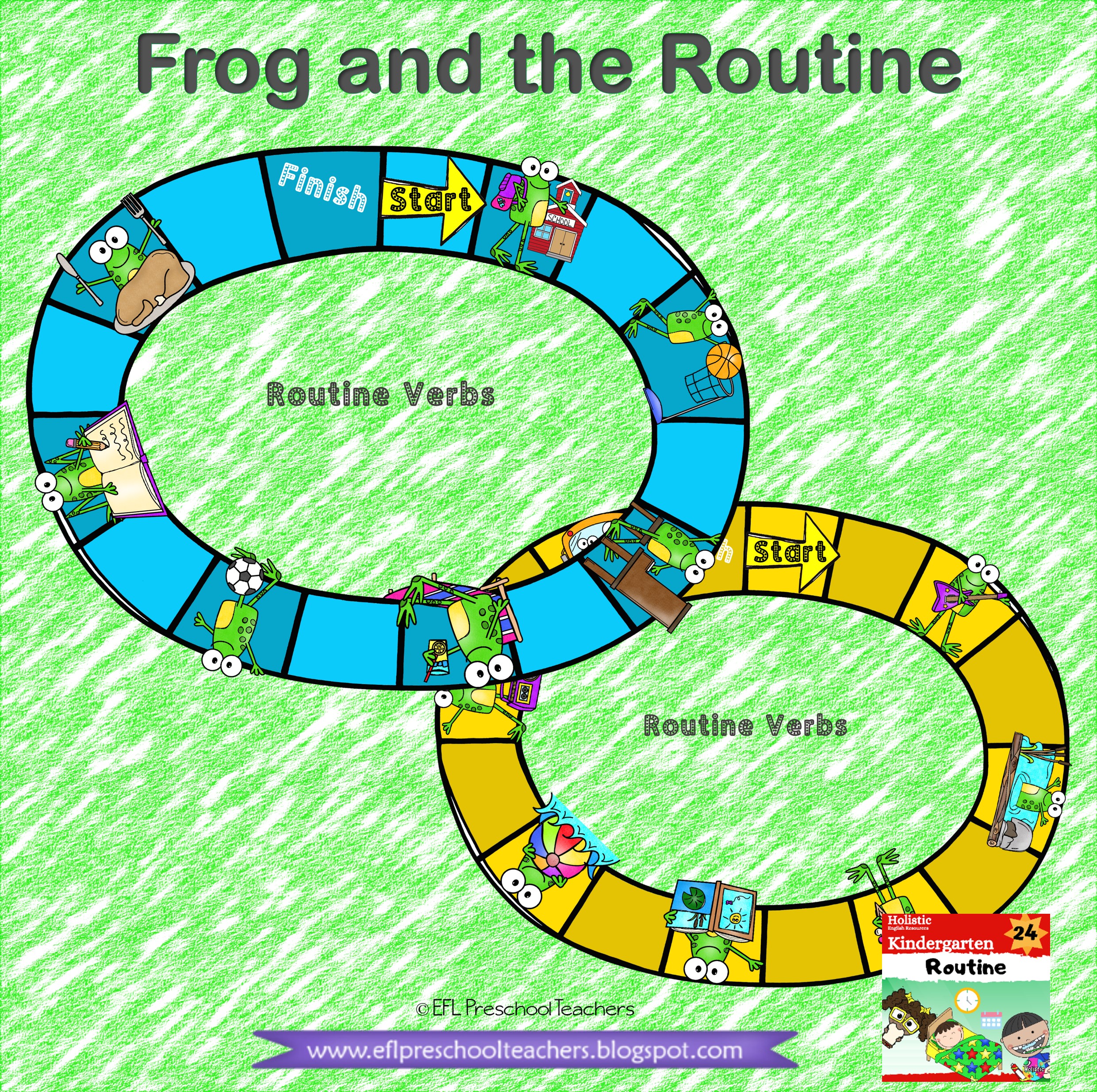
Game boards!  Players roll a die and move their token forward.  They land on a frog doing a routine action. They must say the verb or sentence: The frog is eating!

  If they say it correctly, they stay—if not, go back one space or try again.


More things are included in this resource, go to the blog post: 

https://eflpreschoolteachers.blogspot.com/2022/03/routine-verbs-games-for-kindergarten-ell.html

esl lessons for kindergarten

Find tips, and free resources for teaching English to preschool and kindergarten learners. Come join us on Facebook!

👉 ESL Preschool Teachers Facebook Page

I’d love to see how you use the frog routine verbs and other activities in action! 🐸📚💬

Tuesday, September 6, 2022

Beach Unit Cutouts for Kindergarten ESL

  Get the Beach Unit resource for Teaching Kindergarten English Language Learners here. Find the materials that will appeal to all the learning styles present in your classroom.   https://www.teacherspayteachers.com/Product/Beach-Unit-for-Kindergarten-Holistic-English-Series-30-8461749

beach unit cutouts ESL kindergarten

These Beach Unit cutouts are a powerful tool for helping young English Language Learners (ESL Kindergarten) practice vocabulary through hands-on, visual, and interactive activities. By cutting, placing, and manipulating beach objects, students can explore language in context while developing speaking and comprehension skills.

ESL Beach vocabulary cutouts.

 The Beach scene helps students see all the vocabulary words in a context with the cutouts. Students will be able to identify and describe  each beach colorful object and also where the objects are using prepositions. 

Teacher: What is this?
Students: It's a tree.

ESL Beach vocabulary cutouts.

Create a Beach Scene.

 I wrapped the Styrofoam with brown and blue construction paper to make it look like sand and water. This is the first part where I placed all the beach vocabulary items that can be found at the beach. This is a fun tool to reinforce the new ESL words.

Ask questions: How many crabs are there?
Students: two!

Review other units.
Teacher: How's the weather?
Students: It's sunny.

Ask questions using prepositions.
Teacher: Where is the umbrella?
Students: It's on the sand.

Material escolar en ingles

Basic Questions Practice

Then, I had the next part where I added all the children. Ask questions to describe ongoing actions: What is he doing?

Students: He is building a sandcastle!

Ask about the clothes and have the students describe the location. 

Teacher: What is the girl wearing?
Students: a swimsuit!

Teacher: Where is the sunhat?
Students: It's next to the sun block.


surfing cutouts

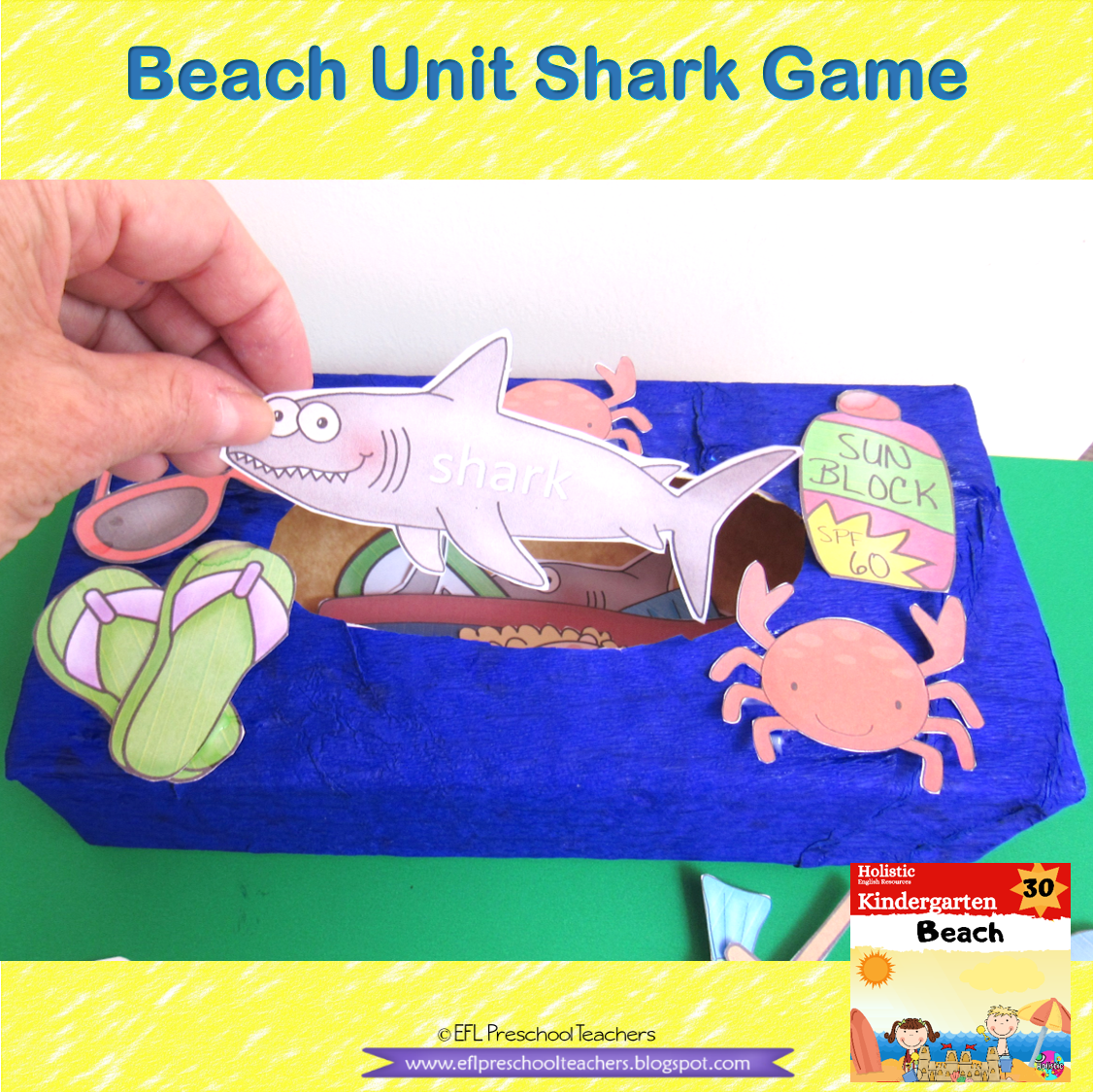
Shark Game 

I am sure that it will capture your students' attention. Print the sharks and cut along the lines. Put the vocabulary cutouts that you want your students to identify in a recycled kleenex box along the sharks. tell the students that they win a point if they cna name the cutout and if they get teh shark comes they lose the game. The idea is to avoid to get the shark.

Beach unit shark game

Check out the video on how to play the game.

Feed Me Game (Communication)

This is a great communication skills game. Cut along the dotted lines and glue onto a box, I used a juice box this time.Show the beach items cututs one at a time and ask: What is this?
Students: sun block!
Teacher: Feed the sun block to the sandcastle!

Communication skills

Another activity to use with the feed me boxes. Print the bucket and glue it onto a paper lunch bag. Print the shells template as many as you need for the students to count. Use the numbers from the Beach Number game. (https://eflpreschoolteachers.blogspot.com/2022/09/beach-unit-games-for-kindergarten-esl.html) Students should be able to count the shells to feed the bucket.
Student:one, two. Two shells.
feed me box ESL activity vocabulary

Make any of the shapes sunglasses using chenille and cellophane paper.Do you want to make yours ? Just email me: ei98srl@gmail.com

shapes sunglasses

Using flashcards in a thematic unit like the beach allows students to experience language in a fun and meaningful way. Here is the blog post:   https://eflpreschoolteachers.blogspot.com/2022/08/beach-unit-flashcards-for-kindergarten.html


Thursday, August 25, 2022

Beach Unit Flashcards for Kindergarten ESOL

 Get the Beach Unit resource or Vacation theme for Teaching Kindergarten English Language Learners here!!  The emphasis of the material is to build confidence and success in your ESL kids.   Click Here: https://www.teacherspayteachers.com/Product/Beach-Unit-for-Kindergarten-Holistic-English-Series-30-8461749

škôlka Beach unit materials

This Beach Unit Flashcards set is designed to help young English Language Learners build vocabulary through visual, interactive, and hands-on activities. Using colorful beach-themed flashcards, students can identify common objects, practice speaking, and engage in meaningful classroom games while learning about a familiar and fun topic. 


Students can identify the Beach as a vacation spot and learn the vocabulary within the theme.

Beach Flashcards

These are intended to be fun in the hands of your students to get started with the new vocabulary. Students will identify objects at the beach, such as: sunglasses, towel,umbrella, bucket, shovel,sandcastle,shellsunscreen, beach ball,sand,beach.

Sorting Activities

Sorting has benefits for your students as it is a thinking skill that will develop reasoning and logic.

 Students can sort the flashcards into the beach items needed to go to the beach or items that are nature part of the scene. Divide the board in two and have them start sorting the Beach flashcards.


beach items needed to go to the beach or items that are nature part of the scene

sort the beach Unit flashcards by feelings or emotions

There’s a bucket, a sandcastle and a sunscreen bottle. I am presenting sandcastle a complete word as in the dictionary. I have seen that many write it in two words. let me know if you need a change in the writing and I can do that for you.
sort the beach Unit flashcards by emotions

Sorting the beach flashcards by colors 

 Kids love this kind of activity to do in the classroom. Just sort the beach items by color.
Sorting by colors the beach items flashcards

 action at the beach flashcards

 Students will be able to identify activities done at the beach. Give your students the command action and have the students mime the action as if they were at the beach. Students can describe ongoing actions that could be done at the beach: swimming, sitting in the sun, playing in the sand.

Student: She is building a castle.

Students will mime building a sandcastle.

Introduce students to express likes and dislikes at the beach.
Teacher: She likes to swim.
Does he like to surf?
Students: yes, he does.

Ask questions with CAN.
Teacher: Can he surf?
Students: Yes, he can.

 Name an action and have the students come to board and point to it.
Teacher: Surf!beach actions flashcards ESL activity

Provide interaction between you and your students as you ask questions such as What does he or she have?

Teacher: What does this girl have?
Students: a surfboard!

students miming beach actions ESL flashcards

Numbers Integration (Crabs Activity)

          Use the Numbers 1 to 10 Crab flashcards to teach counting. Students should be able to recognize each number. Count with your students the crabs on each card. Students can write the numeral on each flashcard or next to it. Ask about quantity.
Teacher: How many crabs are there?
Students: one, two, three, four! Four crabs!

Numbers 1 to 10 Crab flashcards


Have the students place all the crab at the beach flashcards in numerical order on the board.

numbers beach theme kindergarten ESL

Boos your students' speaking skills.Have students come up and count the crabs and write the numbers next to the flashcard.

crabs numbers flashcards

The speaking bag, a vocabulary game
There is a cutout added to the resource to make a beach bag by gluing the cutout to a clear plastic sheet. Place several flashcards inside the plastic sheet and slowing take them out of the beach bag and have the students guess what was inside of the bag.

Students: seedweed!!!!!!

beach bag with flashcards

I finally made the big dice that I always intended to. I found a more less square box at the supermarket. I wrapped it up making sure that all the sides were the same size. I glued clear plastic sheets onto each side to make it easy to change the flashcards for this unit or any other. Student will throw the dice and say the word of the flashcards that landed.
Student: bucket!!!

Beach unit flashcards die

Writing / Tracing Activity

If you have students that are in prewriting level, let them trace the word or write it over by putting the flashcards inside a plastic sheet.

Beach unit sunglases writing

Review with Starfish / Previous Vocabulary

What cute starfish to review the past vocabulary word and use it to introduce the new words for the beach unit.

Each starfish has a beach item. Ask questions:
Teacher: Look at the starfish. What does it have?
Students: sunglasses!
Have a student come and add the sunglasses flashcard next to it.


starfish and the beach flashcards

Face Integration (Creative Twist)

And the Beach items an have a face! 
Well, not really, but enough to review the parts of the face with the flashcards, small cards and worksheets on the resource.
Place the flashcard inside a plastic sheets and with white board markers have the students trace the existing facial pats and draw the missing ones.
Beach ball flashcard and face

This is the worksheet example.
face vocabulary review beach theme

This set comes with the float, the sandcastle,the sunglasses and the flip-flops.

Reader Activity
I made this reader by printing, cutting and gluing onto a wood stick. I use it for reading the words and naming the objects, then, the students can do the same on their own using the reader bucket.

revising vocabulary English learners

Take a look:


The Beach unit Games are a powerful way to reinforce vocabulary and build confidence in young learners. Go to the blog post:


The beach unit is part of a Bundle with 30 units for teaching Kindergarten English language learners:  

https://www.teacherspayteachers.com/Product/Kindergarten-English-Language-Teaching-Units-BUNDLE-7390586

Tuesday, May 17, 2022

Zoo Animals Unit Flashcards for Kindergarten English Language Learners

 Find Zoo Animals activities for kindergarten ESL students including worksheets, games, crafts, counting activities, and printable classroom resources, all here:    https://www.teacherspayteachers.com/Product/Zoo-Animals-Unit-for-Kindergarten-Holistic-English-Series-26-8078353

ZOO or Jungle unit  for Kindergarten English Language Learners

Research has shown that using flashcards in the classroom helps to improve the students’ vocabulary knowledge by using them to play games and speaking activities keeping the students interested.This resource includes colorful flashcards, movement activities, vocabulary practice, body parts review, emotions, shapes, commands, and interactive games designed especially for young ESL and EFL students.


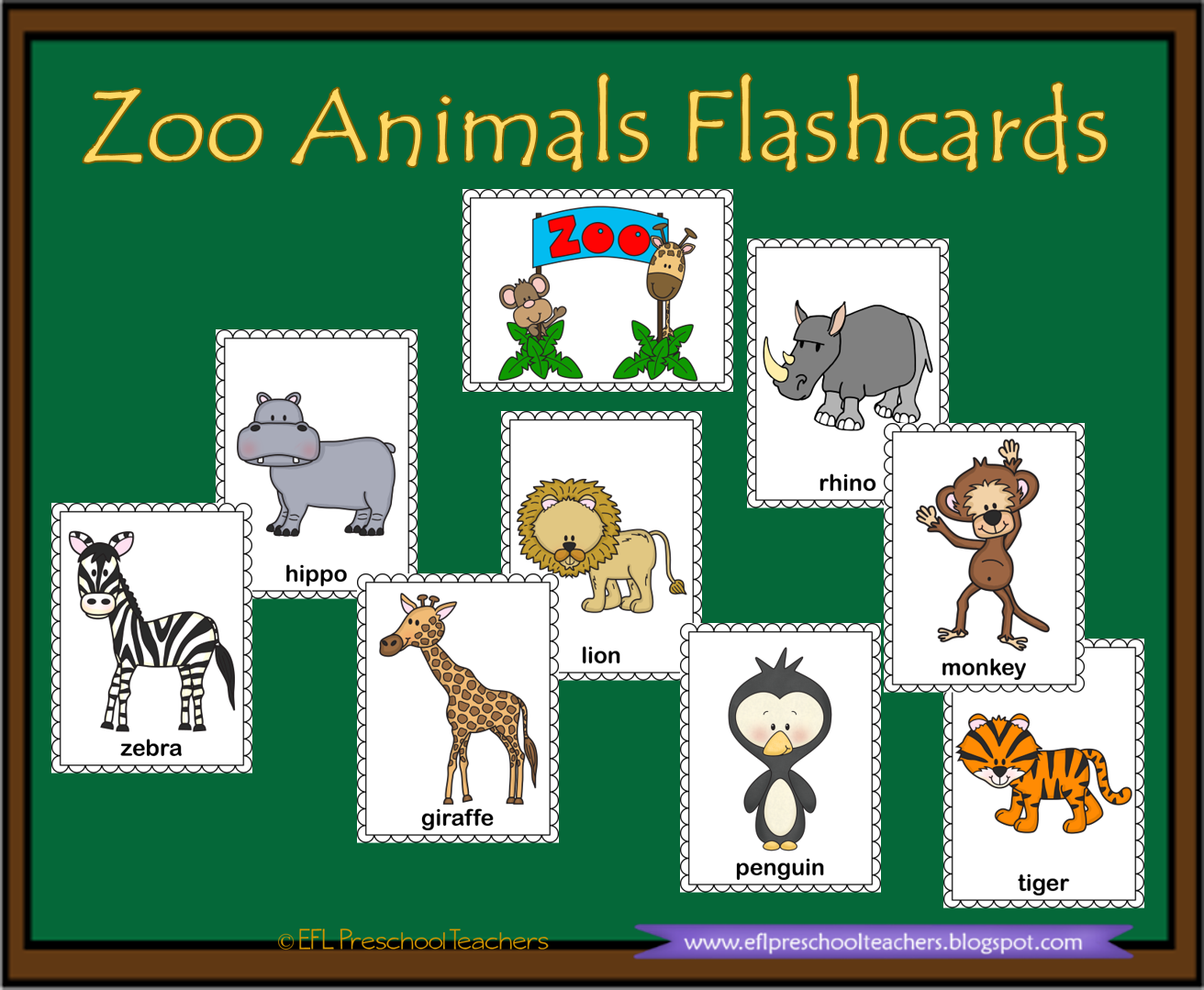
For the zoo or jungle animals you can find the kangaroo,giraffe, elephant, tiger,lion, crocodile,bear,hippo, monkey,toucan,snake, elephant, monkey flashcards among others.

Practice Zoo Animal Vocabulary and Sentence Patterns

Start with the zoo flashcards as a support material, place it in the middle of the classroom or board. Ask the students which animals they have seen or think lives in a zoo in their own language. As they come up with names, place them under the zoo flashcard and say the name in English.

Introduce this sentence for your students to model:
The hippo lives in at the zoo.

Teacher: What color is the hippo?
Students: It's gray!

zoo animals flashcards material

Use the zoo flashcards to reinforce the structure What is it?

Teacher: What is it?
Students: elephant! It’s an elephant.

Teach Zoo Animal Action Verbs

Use the flashcards to introduce how the animals actually move.

Teacher: How does the elephant move?
Students perform the action.
Teacher: Oh! Elephants walk.
Continue with the rest of animals using the flashcards. Introduce the verbs such as swing for the monkey,swim for the sea lion, walk for the elephant.

Make statements with can: The eagle can fly.

fZoo animals unit flashcards for kindergarten ESL students

Practice Listening Skills with Movement Commands

Place several animal flashcards around the classroom. It can be on board, under the chairs, on the desks, etc.
Teacher: Where is the lion?
Students: (run and touch) Here!

flashcards around the classroom

Move like the zoo animals do.

 These are commands review flashcards.

Students will understand and be able to give simple classroom commands.  Students should be related to the language used in the classroom. Here is an example with the giraffes. There are more zoo animals flashcards for students to identify how they move, such as: touch,eat, greet and more.
Use these flashcards to introduce the present continuous.
Teacher: What is the giraffe doing?
Students: It's writing.

Zoo animals commands  flashcards

Students will understand and follow spoken instructions. Describe the zoo animals movement. Show the Command flashcards one by one and say: Stand up like the bear!
Students will do the action, continue with the rest of the cards.

zoo animals movement

The zoo animals are performing an action that are shown on each flashcard.

Show the students another set of flashcards and ask questions: What is the tiger doing?
Students: It is writing! (Students perform the action)


school commands flashcards

Use the lions or any other movement or action verb flashcards to count the animals.
Teacher: Let’s count the lions.
Students: one, two, three, four, five! Five lions.

Lions zoo animals movement flashcards commands

Teach Zoo Animal Body Parts

Use the flashcards to help students identify the zoo animals body parts. Introduce the word tail. Place several zoo animals on the board but inside a plastic clear sheet. Hand in several whiteboard markers and give instructions to some students to circle the tail.

Teacher: Zoe, circle the tiger’s tail!
Mike, find the eagle’s tail and circle it.
Teacher: Whose tail is it?
Students: It’s the zebra’s.
Continue with long and short.
Teacher: Which animals have long tails?
Students: the lion! The giraffe!
Teacher: Jill, Cross their tails.
Do the same with short tails.

zoo animal body flashcards

Review the adjectives long, short, big and small with the  Zoo Animal

Keep working with the adjective long! Use neck and legs. Have the students find the animals with long necks and draw a rectangle. Then have them circle the long legs on each animal. Ask questions.
Teacher: What animals have two legs?
Students: the kangaroo, the flamingo and the monkey!
Teacher: What animals have four legs?
Students: the giraffe and the elephant!
Students can write the number next to each animal’s legs.

zoo animals adjective long

Repeat with the short legs animal flashcards. This activity can be done with arms, necks, feet and any other body part that you would like to contrast between long and short.

short legs animal flashcards

Sort the animals into big and small

 Elicit the language instead of having your students repeat after you. Use your hands to show big or small and have them give you the correct word.

big and small zoo animals flashcards

 zoo animal flashcard can work to identify the body parts

 Include as many words that you need: stripes,neck, ears, eyes, legs, tail,paw,beak,trunk,tail,wing.

identify the body parts for the zoo animals

        There is a set of Zoo Animal’s Faces to review the parts of the face.

Zoo Animal’s Faces

Students will associate what the ZOO animals eat

Use the flashcards to help associate the zoo animals to what they eat. Place the giraffe flashcard in the middle of the board. Ask students what does the giraffe eat. They might say words in their native language. Pull out the flashcard of the food items they have guessed and say the word in English.
Teacher: Giraffes eat leaves!

Zoo Animals eat

Teach Feelings and Emotions with Zoo Animals

Review the management of the emotions using the zoo animal flashcards. Have the students sort the flashcards into happy, sad and angry.
happy, sad and angry zoo animals flashcards

Review Shapes with Zoo Animal Activities

Review the two-dimensional shapes using the zoo animals that come in four basic shapes: rectangle, circle, triangle and square. Students should be able to identify the shapes.

two-dimensional shapes zoo animals