Showing posts with label tracing. Show all posts

Saturday, January 9, 2021

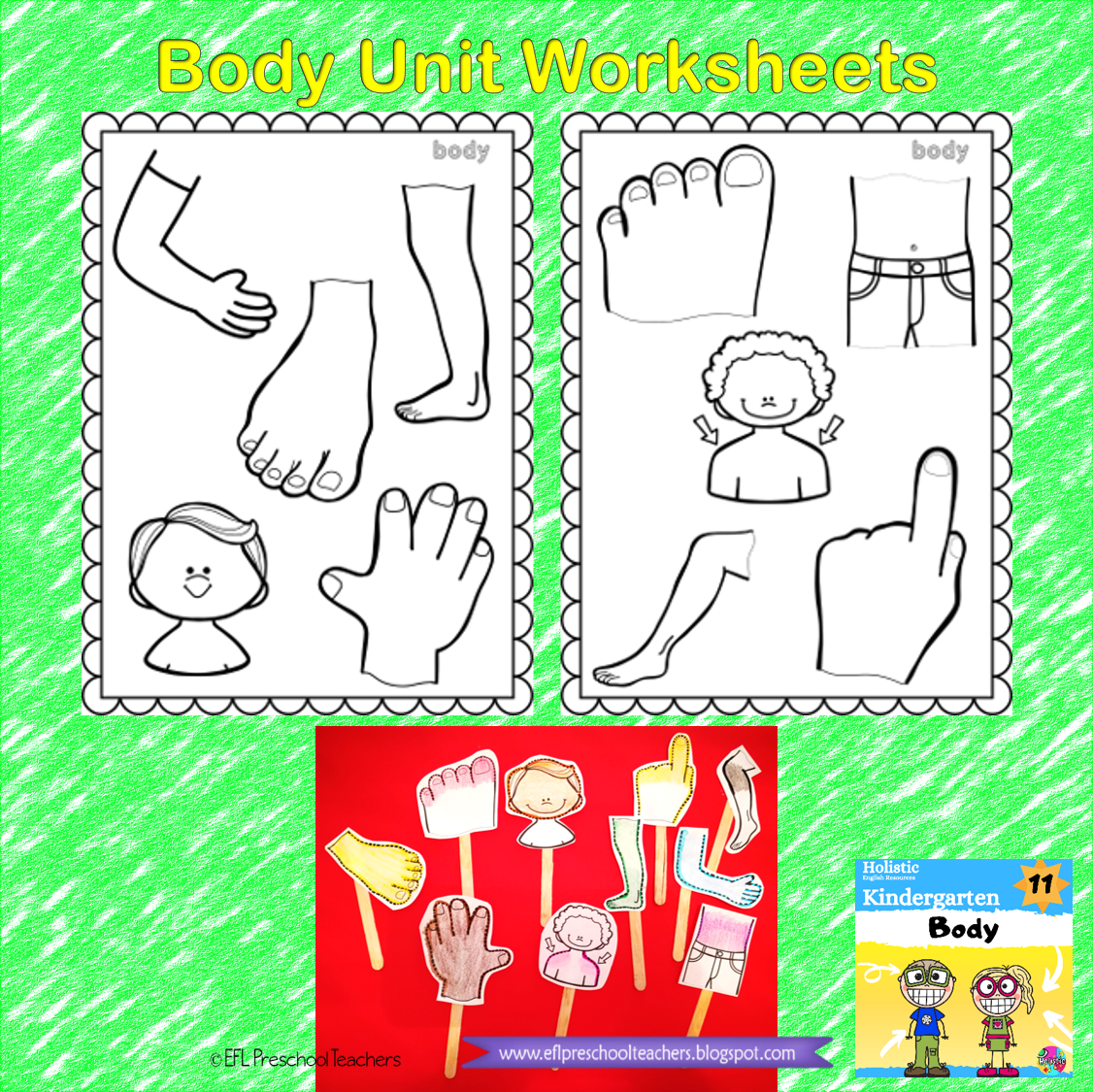
Body Unit Worksheets for English Language Learners

  Link to the complete Body Unit resource:  
 https://www.teacherspayteachers.com/Product/Body-Unit-for-Kindergarten-Holistic-English-Series-11-6416731 

Body Unit worksheets for English Language Learners

These Body Unit worksheets for English Language Learners provide the perfect opportunity for students to practice and reinforce vocabulary through hands-on activities. Designed for the practice stage of your lesson plan, these worksheets help young learners review body parts using coloring, matching, cutting, and speaking activities in an engaging and meaningful way.


Be prepared with additional materials. It’s better to have more worksheets just in case and be able to adapt them to your particular students.

small flashcards for interactive games.

This first set of Body unit worksheets can be turned into small flashcards for the students to play many games. Students will name each word and then trace it.

Body unit worksheets

Coloring the body parts worksheets.

Students should be able to identify the body parts on the worksheet: arm, foot, leg, head, hand,etc. Students can cut each item and add a craft stick to create puppets for games in class

Coloring the body parts worksheets

Sorting 1 or 2 Body Parts

Body parts come in 1 or 2 and the idea is to sort the cards in the worksheet. You can dictate the color of each body part as a way to review colors. I made tents for number 1 and 2 by cutting off from a recycled file folder. Students will cut all the cards and sort them into 1 or 2 body parts.

sorting flashcards kindergarten

Take a look: 

Labeling & Speaking Activity

Labeling the worksheet is great for older kindergarten students.  There’s the boy and the girl. Students can describe their picture.
Student: Look, It's my body.I have two arms.

Labeling body parts worksheets

Students can color the picture of themselves using the template to guide them. If possible, they can trace the words. Use these worksheets for having students talk about their body parts.

Students: I have a head. I have two hands.

The class can say their observation: She has two legs!

trace the words of the body parts


Big/Small + Left/Right
   Some extra worksheets to review the adjectives big and small for the body parts. Students can also identify left and right for legs, legs, feet,hands. Have your students show you their own left and right body parts.
Teacher: Show me your left arm! Show me your right leg.

worksheets to review the adjectives big and small

These worksheets are for used for color by number and labeling. 

color by number and labeling body parts worksheets

Students love to print their hands.

Hands-on activities like printing or tracing hands worksheets

Cross-Unit Review (Fruits & Vegetables)

I like to review previous units with the one that I am teaching. Students will add body parts to each fruit, such as, nose, arms, maybe hair.  Students can cut each fruit and glue them onto a plastic or paper plate and play match up.

There is also the vegetable worksheet. 

fruit and vegetables worksheet for preschool

Toys / Robot Worksheet

Review the toys vocabulary by using these worksheets. Students can complete the missing body parts using the robot worksheet. 

Students: This is my robot. This is the head. This is the body.

toys vocabulary worksheets for kindergarten

Shapes Integration

These worksheets also allow teachers to integrate shapes vocabulary, giving students additional opportunities to review and connect concepts across lessons. 

Shapes Integration with body parts worksheets
                                             

Introduction for Holiday Worksheets (Easter)

Have the students trace and color each body part of the bunny. Then, they cut the bunny and make a craft stick puppet for multiple speaking activities.
Holiday Worksheets (Easter)
       
This other worksheet would be a label the bunny's body parts.
label the bunny's body parts worksheets

These worksheets provide a comprehensive way to move students from recognition to production. By combining coloring, cutting, labeling, and speaking, learners engage with the language in multiple ways, leading to better understanding and long-term retention.


These body unit games are designed to keep students engaged while encouraging them to continue practicing English.Go to the blog post:
         

                         This is my Instagram account! 
        

Thursday, October 15, 2020

Family Theme Worksheets for Kindergarten EFL

 Get the complete Family Unit for Kindergarten ELLs with flashcards, worksheets, games, crafts, and ready-to-use activities to make your lessons easy, engaging, and effective! . LINK to the Family Unit resource for your children: https://www.teacherspayteachers.com/Product/Family-Unit-for-Kindergarten-Holistic-English-Series-8-6126315

Family Unit resource for your children

These Family Worksheets for Kindergarten ESL are designed to help students practice words like mother, father, brother, and sister through fun and meaningful activities such as tracing, matching, coloring, and cutting. Worksheets provide an important step in language learning because they allow students to practice vocabulary independently while developing fine motor skills


This is next part of the ESL Lesson Plan- Practice. It can be done with  the Worksheets.

Family Worksheets toReinforce vocabulary through repetition

Listen and color using the adjective words.
Cut through the lines and then you have small cards for the students to play games. Assign a color for each family member. Teacher: Baby brother is blue!

               Family Unit Worksheets for Kindergarten ELLs

I made a family album using the Family Unit vocabulary worksheets. I glued each card onto a file folder and made it look like an album. You can ask questions. 
Teacher: Who is this?
 Student: It's brother!
Teacher: What is his name?
 Student: Peter!

family members worksheet for preschool

Review the numbers 1 to 10

There is a set of numbers 1 to 10 for the students to color.
Teacher: Number one is orange.
The students have to place the number on the family member.
Teacher: Number two is on the baby sister.

family worksheets kindergarten ESL tracing mother father brother sister

Making it a little more clear with the video!

Provide a way for your students to connect prior knowledge (numbers) to new knowledge (family members). Use bottle caps with the numbers 1 to 8 written using a sharpie. Have the students place them as you say as a listening activity.

Teacher: Number 3 is on Mommy!

ESL family vocabulary worksheet matching activity for kids


Listen, trace and color worksheets set for the family unit. 

Practice early writing skills (tracing words). Trace the family members words  using only one color for each one. 

When all family members are traced have the students add a characteristic to each member. It could be glasses for grandma and grandpa. A ball for brother and so on.
Students cut each family member to make puppets by gluing them onto craft sticks creating family puppets.
Teacher: Who's this? 
Students: It's grandpa!
Teacher: Trace him blue.

Using an egg holder students can sort the members into boy and girl and young and old.

           kindergarten students practicing family words tracing and coloring

 Improve fine motor skills (cutting, coloring)

Even more, have the students cut around each family member and tape them onto straws ( I have recycled from Burger King). Students will have puppets to play games such as Show me!
Teacher: Show me Daddy!

family cut and paste worksheet ESL activity for young learners

Listen, trace and draw pages

More family members to add parts of the face. Or, it can be to draw the emotions as you dictate them.
Teacher: Brother is sad.
Use bottle caps to have students point to any phrase or sentence you say.  Teacher: Dad is angry.
Teacher: Mom and sister are happy.

family vocabulary worksheet English language learners activity
family vocabulary worksheet English language learners activity 


                 From a worksheet to family finger puppets

 Dictate how each family members looks like. It would be good to have each finger puppet ready to describe to the students and have them color each family member.

Teacher: Look ! This is dad. His hair is brown. His eyes are yellow. His nose is brown. He is a rectangle. The rectangle is purple.

From a worksheet to family finger puppets

I assembled the finger puppets by cutting each family member and gluing them onto fun foam, I let the bottom of each shape open to put the finger inside. I could place my fingers inside, I am sure that the student’s little finger will be able to fit.

worksheet to draw the family members

      There is a personalisation worksheet for the students  to draw their family members portrait. Explain to your students that they will draw their family and later describe their picture to the class.

They can introduce the family members using the grammar structure: This is my family.He's my dad. She's my mom. This is me!

This activity will help your children to relate the learned language to their own lives.
Also ask about their names.
Teacher: What's you mother's name?
Student: Patricia!

Ask about how many brothers and sisters they have.
Teacher: How many brothers do you have?

Have them decorate the family picture frame.

draw their family members portrait worksheet

More worksheets to Build confidence working independently

Coloring activities reinforce vocabulary while keeping young learners engaged.

family worksheet for grade 1 coloring

This printable book and games set is part of a complete Family Unit for Kindergarten ELLs. Here is a blog post to check out.


Check my Instagram Account if you are a kids teacher: https://www.instagram.com/rosamelia_eslteacher/

Monday, July 24, 2017

School Theme for Preschool ELL

Trace words: Tracing increases memory and retention. Have children experiment with writing words in English. Have children trace each word and read it. You can also create a word wall with them and play some games, such as identifying the words. But just limit it only to the words you are teaching on this specific theme.
Use the trace the word cards for the Guess Game. Attach a picture to a student´s back (player) . Don´t show it to that player. Display all the playing vocabulary flashcards on the board as clues, keep them no more than 6. The player has to find out which picture is on his/her back. The player has to ask questions:  Is it a book? Is it blue?. The class will shout YES or No. 
Make Take-home books  with the tracing cards. Children can assemble an accordion book. Make a large strip of cardboard .. .   
Fold the strip into equal sections.  Decide how many words the book will have. Glue the title of the book on the front.
Make enough copies for each child to take home a book. Have them write their names on the cover. Send a note home to the parents about the book. Do group reading in class. Use your teacher´s version. Have the class name each picture and read each word with them.  By sending the book home you are supporting parent-child reading time. Reading will enhance oral language development.

Posters: most books come with huge posters that we hardly use.  Here´s an idea with the small flashcards or word tracers.
Hand a small flashcard to a student  asking:
Teacher:  What´s this ? ( a book)
Student:  a book.
Teacher:: Go to the poster and find another book. Show me a book.
Class: a book.
Repeat with other vocabulary words.
Another idea:
Have a student pick up a small flashcard and ask the class.
Student: What´s this ?
Class:  a pencil
Another student walks to the poster and finds the picture. You can also label all the pictures in the poster.

Have the children draw as a way to stand for writing. The drawing will have a communication purpose. Give each student the classroom  frame.
Ask them to draw their classroom with furniture, classmates and school objects, anything they want.
Have a student come to the front of the class and point to objects in the picture.
Teacher: Point to the door.  Continue with all the other school objects in the picture.

Games with cutouts. Remember to laminate them with contact paper.
Even though times have changed this game never gets old. They have fun while they play and want to play more.

 - Show me game. For this game try to print a set of card for each child . Name a card and the students show the card to you.
-   Place the school objects cutouts on the board. Have students name the different objects. This is a crayon.
 - Place the cutouts in different locations around the classroom. Give students commands for pointing to different cutouts.

Bingo.  This activity helps children identify school vocabulary words.
There are 20 cards, in a colored and a black and white version. I usually print 2 sets , each one in a different colored paper. I glue one set onto a file folder and place an envelope outside the folder for the other set which are the cards used to call out the school words. Provide  the children the grid where they can draw 4 vocabulary words. Call out the school word and have the children mark off their drawing if they have the word. Have them cross out all the grid to call out BINGO!

School theme book. Read aloud to the whole group. Reread using charts or enlarge the book pages and make a big book.
Worksheets that be transformed into more activities.
Worksheet 1. Use the school cards as puppets. I glued them onto empty toilet paper tubes. They can be prompts to answer simple questions or to start a small conversation in class.
Worksheet 2. The worksheets can be approached creatively and from different perspectives. I just propose an idea but you do a completely different thing and I´d like to see that.
Worksheet 3. Think of more creative ways to use the worksheets. I turned these school items into craft stick puppets and then had the children sort them into the toilet paper tubes puppets from the first worksheet.
 Worksheet 4.  This is a tried and tested worksheet.

More Worksheets but related to the School Furniture.

As always my first worksheet is to be used as flashcards. I added the letters. I printed them out in colored paper and glued them onto wood clothespin. It might have been nicer to paint them in a bright color. The goal is that children rewrite the words using the clothespin letters.

This other worksheet is a color by number. It is fun way to review colors and color words. It does benefit children as they have to read or listen to the instructions in order to color, I make them underline the phrase in the corresponding color.  The number will represent color not just quantity. The children will have to go through the 6 numbers to see the finished drawing.  After finishing the worksheet I was wondering what else to do, so I thought that cutting each instruction phrase and gluing it on each number would be a good idea.

Before working on this worksheet, mime the prepositions. It can be in, on, under. Use your actual board, chair, and table. Make larger copies of the glue, pencil, crayon and demonstrate placing the glue on the chair.
Give the children their worksheet. Assign the color if you wish.  Then have them cut the  glue, pencil, crayon.  Have the students practice some actions, without using glue.
Teacher: The glue is on the chair.
Give more examples to do.
Finally, children glue their objects on the school furniture either as you assign them:
Teacher: The crayon is on the board.
 or color as they want and then present to the class.
Student: The pencil is under the table.

A creative worksheet, where students have to draw the school´s front door and themselves going to school.

As I have seen some of these puzzles, I gave it a try and created this one. I added the words so children could paste them on the puzzle. It would be a good idea to paste the sheet onto cardboard or fun foam before cutting it. The puzzle is a manipulative to work with as they will arrange it as they want before putting it correctly using the number order. As we work with the vision of the whole child it develops hand-eye coordination, fine motor skills, it gives the opportunity of problem solving as they put all the numbers in order. Memory is also involved as they will remember how the actual drawing was before cutting it.
Shopping List: Hand in a shopping list to each group of students in the class. Have them find the object and place them in a bag. There are 10 shopping lists , all of them are different. You can give the group that finishes first a sticker as a prize.  
Letter arts and crafts for the School UNIT. It's either that you do them and use the letters for reviewing the vocab or you have the students do one letter and then display in class. It is here in this product.

I have more school theme posts with activities, ideas, resources.


Follow me!