
These cutouts are part of a complete system that helps students learn and use vocabulary effectively. Turn your lesson into a complete ESL learning experience, here: https://www.teacherspayteachers.com/Product/Insects-Unit-for-Kindergarten-Holistic-English-Series-18-6984205

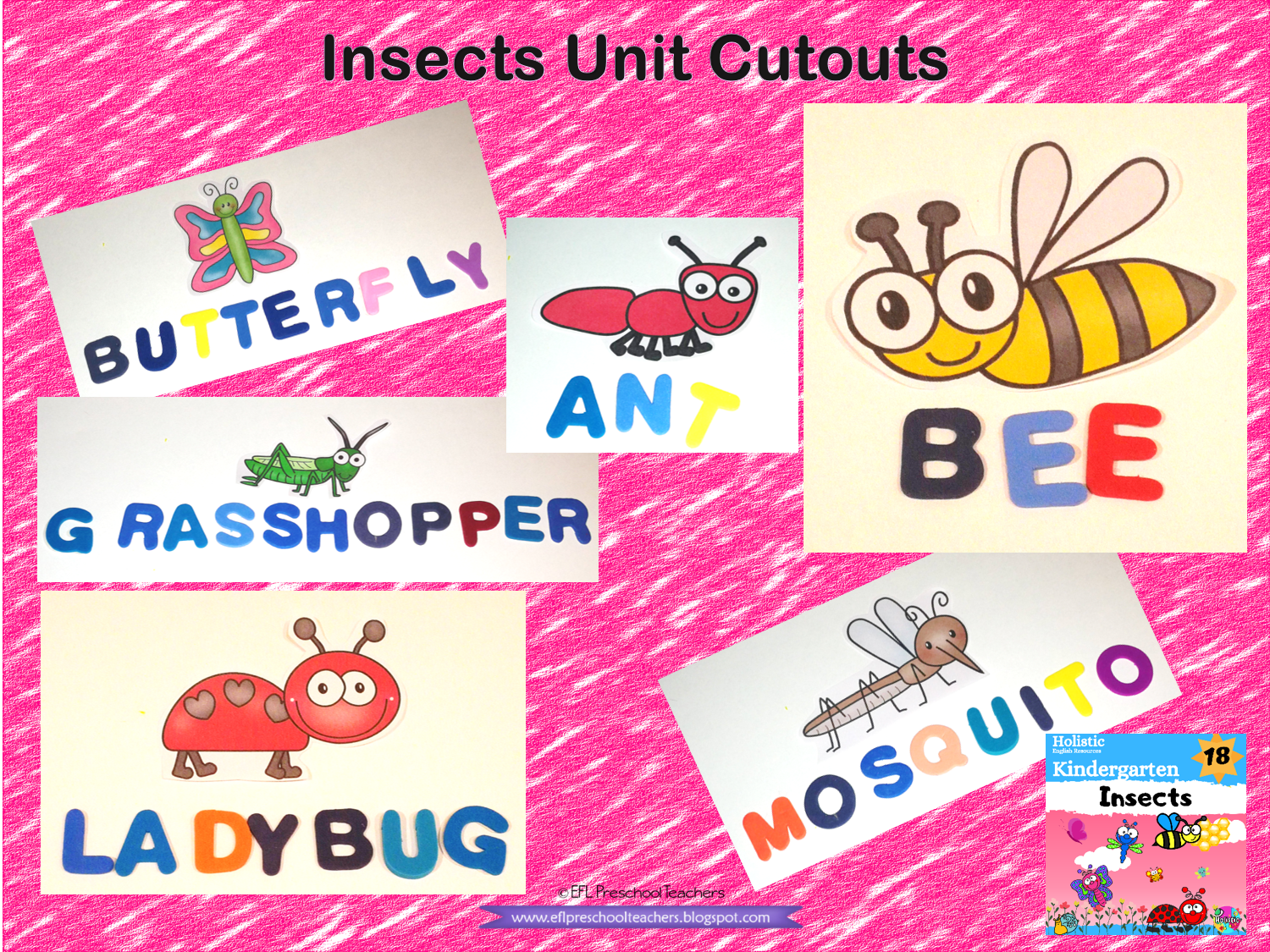
These Insects Cutouts for Kindergarten ESL are part of a complete insects unit, designed to help students move from practicing vocabulary to actively using it through speaking and interaction. After learning vocabulary with flashcards and practicing with small cards, students are ready for the most important stage—using the language.This is the stage where students start speaking and using vocabulary naturally.

Print
the jar template and glue it onto a lunch bag.
Teacher: What’s in the jar?
Students: a butterfly!
Teacher: Yes! That’s right.

Students: big bee, small bee, big butterfly, small butterfly.

Place several cutouts in a row. The first row will have the
same insects. Point and have the students repeat with you.Teacher:ant, ant, ant. They are the same!The second row place a different cutout.Teacher:bee, bee, dragonfly. Which one is
different?Students: dragonfly!

Place
the insects cutouts on the board. Tell the
students that all the insects have 6 legs and that you are going to count them
together. Circle the legs
afterwards.

Where are the insects activities?
Use the flashcards to place the cutouts as to where you can find the insects.
Here is a small chart that I made up as a guide.


Teacher: How many insects are there?
Students: three!


Another
idea is to make a beehive using
toilet paper tubes inside a tissue box.
Students: a red bee in the beehive.

Sorting the insects cutouts by shapes into jars!

Students can name each insect as they sort the cards, providing extra speaking and reading practice.

Sort the insects cutouts by color
Mix the cards and have students sort each insect into the correct jar according to its color. This engaging hands-on activity provides extra practice with color recognition and insect vocabulary while developing classification skills. Encourage students to name the color and the insect as they sort the cards, for example, "Red ladybug" or "Blue butterfly."

Print the quantity jars and insect cutouts to create a fun counting and sorting activity for your students. Children count the insects and place them into the matching jar labeled with the correct number. This hands-on game reinforces number recognition, one-to-one correspondence, counting skills, and insect vocabulary while developing fine motor skills.
Students can work independently, with a partner, or in small groups, making this a great literacy center, math station, or early finisher activity.

Sort by shapes of the insects
· I
saw this idea and gave it a try, I have so many old CDs to recycle.

I covered each CD with construction paper and
added a shape label to each one. I glued all the shapes insets to clothespin
and had the students sort them out.

Use the flashcards to direct what the insects eat.
Teacher: This is a
butterfly. What does it eat?
Students: a
flower!

✔ Highly interactive
✔ Encourages speaking
✔ Easy to prepare
✔ Perfect for young learners


No comments:
Post a Comment
Note: Only a member of this blog may post a comment.